Showing posts with label Politics. Show all posts

Thursday, April 18, 2013

The looming death of capitalism and the population explosion?


During my extreme left wing era (which probably lasted about two years until I realised they were exactly the same as the extreme right wing, but with a different colour) I used to hold the opinion that people should be marching for the right NOT to work. Work, in my emerging mind, was a form of slavery in which we were beholden to the slave masters; the capitalists.
Strangely enough, that idea of mine, (or did I read it somewhere in one of the plethora of left wing books and journals that I read, or even in the realm of science fiction, of which I was and still am, a huge fan? I'm not too sure.) has evolved into an idea that, at sometime in the future, we won't need to work as the mechanisation of the workplace will be doing the work for us.
There are now tens, if not hundreds, of millions of people who will never be in continuous employment during their lifetime, because of mechanisation. Millions of people have been thrown out of work because of computers. Many of the younger people reading this will not have experience of the armies of clerks that were needed to get the paperwork done. They have mostly all gone. They will not remember the huge swathes of the population who used to work in factories; robots have taken over their monotonous jobs. Times have changed. We, as a global society, do not need all these workers.
So what do we do with all of those people who are excess to requirements? In the past that question didn't arise because we lost so many people through disease, famine and wars that we needed the 'working and middle classes' to keep producing children to fill the gaps left by their premature deaths. The advance in medicine, new surgical techniques, better food production and treaties put paid to this sort of levelling. The advances in technology have put paid to the jobs which have only exasperated the situation. Do we then hold back medical care for sections of the population with the hope that more people will die off? Do we increase global tensions to the extent that massive wars take place again? Maybe we have a combination of both? We cannot un-invent technology so something will have to be done, mostly in first and second world countries, to address this situation. Or do we really need to?
The global society we live in now makes this a problem solely because we live in a global society of capitalisation and finance. Capitalism is not the cure; it is the problem. As a species we can feed, house, educate and give medical care to all the peoples of this small planet while still supporting the advancement of technology. So what is stopping us from doing that? The answer, sadly, is money. Take money out of the equation and there is no 'problem'. Let us remember that 'money' is just the authority to get something done. Money is the lubricant to enable the society to function. Take away the 'society' and we don't need the money. Ironically, the late Margaret Thatcher was right (I paraphrase) when she said that: 'There is no such things as society' but not in the terms that she envisioned. 'There are only people'.
Yet, if we do not feed, house, educate and give medical care to those people who will, increasingly, be unemployable then we will have a breakdown of order. We will have riots and disorder breaking out all over the world. That is not capitalism, which the leaders of this planet espouse, it is, instead, a form of communism. Remember that this is not just affecting the great unwashed of the 'working classes' but, increasingly, the aspirational 'middle classes'. How many university graduates are unemployed, in their chosen profession, looking for work with little prospect of gaining employment in their chosen field? That figure will only increase as technology takes large bites out of their prospective employment as it has already done with the 'working classes'?
There are troubled times ahead and, until we accept the unthinkable, the potential for disorder will only increase. Capitalism will have to go. It has no future within a peaceful society. Capitalism, in the near future, will not save us, it will destroy us.

Friday, March 9, 2012

Should the Unions become apolitical?


There was a time when the Unions and the Labour party were hand in hand but those days seem to be quickly disappearing, especially in Scotland. Could the time be close when the Unions have to seriously think about breaking its ties with the Labour party and forging its own future? After all, the Trade Union political activists of the 1800s were first sponsored by the Liberal party to stand for seats. The Labour party sprang from the political needs of the Unions at the time and managed, in its early days, to further the causes of the working classes and instigate institutions in the UK that fundamentally changed the conditions in the way that working class people were forced to work. As the working classes became more affluent the Labour party had to shift its political policies slightly to the right to keep in step with their core voters. In doing so they abandoned the other working classes to the scrapheap who, through no fault of their own, were now non-working classes. There are whole generations of families who have never seen work and, if current policies continue, never will see work. They are ignored by the Unions because they pay no Union dues, ignored by the government because they don't care, as long as they don't riot, and ignored by the Labour party because their votes are more or less guaranteed, in England and Wales.
So, the Unions have no political, moral conscience when it comes to the long term unemployed which, even though contrary to their initial ideas of socialism for the masses, in reality, is not their concern. Their concern should be for the members of their respective Unions. However, in the past, we have seen horrendous situations were the Union leaders were taking undemocratic steps to follow a purely political agenda at the expense of their members' wishes and needs. It would have to be stressed that at that time the Unions, and the Labour party, were deeply infested with 5th columnists from the old USSR whose ultimate agenda was world domination by destroying the capitalist system from within. The question that needs to be asked is: "Do the Unions need the Labour party or the Labour party need the Unions?". I think the later is the correct of the two because the Unions are the paymasters.
The old needs for the Unions have gone as their political off-shoot, the Labour party, managed to achieve a fair number of their goals. So what should be the role of the Unions now? Evidently their primary function is to look after the needs of their members. Their members no longer need to fight for free education, free NHS, free school meals for poor children. Those battles have been won. There is a wider view of Unions that should be explored with regards to the EU. Too many countries are welcoming immigrants with one hand and on the other moaning to their own citizens about their inability to do anything about it because of EU rules. Decide for yourself which countries in the EU do this. The answer, but not just now, is to have EU wide Unions that can level the pay for tradesmen all over the EU. If a member country goes through a financially difficult period then their trades people can travel to any other part of the EU knowing that they will receive the same wages as their mother country. These are the things that the Unions should be heading to. They should also get out of this mind-set that there is a them and us attitude. Fair enough, the same could be said for the management side. If the company they work for shuts down then everyone loses. It should be incumbent upon Unions to help the company to survive and flourish; not try and grab everything it can.
So, can the Unions politically afford to dump the labour party and move on? I believe they can. The idea that a Union 's only concern is for the welfare of its members within a wider capitalist structure is fundamental to their current aims and, in some cases, survival. The Unions have had too bad a press in recent years and doesn't seem to be able to get over to its potential members the benefits that a Union can give them. There are many, many people who are in the Unions but do not support the Labour party. The Unions will have to, eventually, realise this and change their allegiance back to their membership by dumping the Labour party and forging new links with all who would support their aims.
But I'm not holding my breath for that one. The Unions are a good idea but the way in which they are being run is far too political. Released from it political obligations then I can see the Unions returning to their original function whichwas to look after their members wishes and needs.

Monday, February 27, 2012

Scotland Bill and its amendments

This bill is a stitch up and its amendments are designed to castrate the Scottish parliament. The Lords know that this bill will never be accepted by the Scottish parliament so you have to ask the question: "Why are they doing this?". Why is so much money being spent on generating a bill that will never see the light of day? The only conclusion that I can come to is that this is a political stick to try and bludgeon the Scottish parliament and, therefore, the aspirations of the Scottish people into submission. If this bill does not pass in the Scottish Parliament, and under the current administration, this Bill, as it stands with its amendments, has as much chance of passing in the Scottish parliament as I have of being the next monarch of the Scots. So what is the Bill really for. I am sure that the Bill, when first designed, was not to hamstring the Holyrood, but when it got to the House of Lords and Lord Foulkes of Cumnock got his grubby little hands on it the Bill suddenly changed into a spiteful attack on the democratically elected Government of Scotland.


So, back to the question: "Why are they doing this?". The only conclusion that I can come to is that a tiny part of the Bill will be of benefit to the Scottish peoples but the rest will, if made into law, basically take the parliament away from us. This way, the Unionist politicians and the Unionist media can have a field day ignoring the bad bits for Scotland and highlight the good bits so that they [the Unionists] can effectively say that they are trying to help Scotland but the nasty SNP has stopped the Scots from gaining more powers. Of course the media will not highlight the majority parts of the Bill where it is grabbing back powers from Holyrood, neither will they mention the other parts which effectively ban the First Minister of the Scottish Parliament from  being able to function on the international stage. This is Gerrymandering by the back door.
Just like the Calman Commission's attempt this Bill will never see the light of day in the Scottish Parliament. Westminster does not care one jot for the democratic processes in these Isles and is only interested in its own power and control. The Mother of Parliaments? More like the Mother of Tyranny.

List of Amendments

Thanks again to Melanie McKellar

Thursday, February 23, 2012

Scottish Affairs Committee questions

Interesting article in the 'Courier' about the questions asked by the Scottish Affairs Committee. That's the same committee which was boycotted by the SNP MP Eilidh Whiteford after abusive remarks by the committee chairman Labour MP Ian Davidson towards her. Anyway, back to the questions they ask:

1.  What is Scotland's share of the national debt?


What is rUK's share of the national debt?


2. How would North Sea oil revenues be defined and distributed?


Mind your own business that's up to us.
3. Would Scotland retain the use of sterling? If so, would it be fiscally independent?
Already answered, so why ask stupid questions? We will use the pound until it suits us otherwise.
4. What would be Scotland's credit rating?
It's going to be far better than yours come independence.
5. What is the potential impact of consitutional uncertainty on inward investment into the UK as a whole, and Scotland specifically, in the period before a referendum?
Same as before so why try to make a mountain out of a molehill? Oh, I forgot; you're Unionists and it's your job to put down Scotland as much as possible. Talk about leading questions!!!!
6. Would Scotland have a separate armed forces, and if so how would they be constituted, configured, funded and equipped?
We've already paid for that so, when independence happens, we will take back what is ours. Simples.
7. Would Scottish citizens continue to serve in English, Welsh and Northern Irish regiments and vice versa?
Why not? If they want to do that then that is up to them. We will not be a Stalinist state demanding that our citizens only fight for our country. Scotland has had a long history of its men fighting for other countries.
8. Will a passport be required to travel?
Sure, if you travel outside the EU. The best thing about independence is that we get our own passport.
9. Will Scottish citizens have free access to NHS services in England, Wales and Northern Ireland, and vice versa?
Why not? As long as they are not pretending to be resident in Scotland to get a better NHS than the English have.
10. Would Scotland automatically become a member of the EU?
Would England?
11. Would adopting the euro be a condition of entry?
Would it for the English?

Thanks to Melanie McKellar for bringing it to my attention over at 'Aye4Scotland' on Facebook.

Tuesday, February 21, 2012

House of Commons 1955


This was in the House of Commons in 1955. It speaks for itself.


Mr Arthur Woodburn (Clackmannan and East Stirlingshire)
Co-existence is the right word.
The sense of tidy-mindedness that exists among administrators has led to continual and, indeed, continuous attempts to get rid of what appear to be anomalies in the administration of Scotland and the administration of England, but the Scots have resisted these attempts through the generations. They fought their own nobles. Allied with the Church they defeated the nobles. They fought their own king, as they fought English kings, and they fought their own king when he was also King of England. They defied the Church and everyone else who made any attempt to impose rules upon them that they did not adopt of their own free will. The resistance that has gone on now for hundreds of years to what they regard as English encroachments has become a national habit, and if causes of defiance do not exist, I think. sometimes, that we even look for them.
It was the strength of this tradition that made people, when the Union of the Parliaments took place in 1707, regard it as a betrayal ofScotland, a sell-out, a surrender of Scotland's interests, and there is no doubt whatsoever that that spirit, that feeling that something went wrong then, has persisted ever since as an undercurrent in our national thought. On the other hand, if we look at this without emotion and intelligently, we have to realise that 1707 was the turning point in the prosperity and progress of Scotland.
Up to 1707, Scotland never had peace. The people of Scotland never had an opportunity to develop their agriculture or to do anything to give them that accumulation of prosperity which makes a nation rich. From 1707 onwards, Scotland went ahead by leaps and bounds. It never looked back until we came to the slump of the inter-war years. That prosperity came because we had mutual help and co-operation and—a very important part in consideration of this Report—we had a share in the English trade in which,. up to then, we had been rivals and not partners.
There were periods after 1707 in which everyone was almost agreed that Scotland should be called North Britain, and we still have relics of that in the names North British Railways, the North British Station Hotel, and a great many institutions of that kind which still exist in our midst. Indeed I can remember when letters were sent to many people, addressed "N.B." [HON. MEMBERS: "They still do."] Of course, we recognise that there are certain weaknesses in geographical teaching in the South of England, and these tend to come out even in the addressing of letters.
We have no objection to our English friends remaining English and being proud of their heritage and destiny. They can sing, "There must always be an England," but they must not object to our singing, "There must always be a Scotland." This cold war which has gone on for a couple of hundred years between English people and ourselves is due to the lack of appreciation of these national feelings, and I am of the opinion that this indifference to national feelings, that unfortunately exists in England, was largely the cause of our losing America, might have lost us India, and certainly helped us to lose Ireland. Carried to an exaggerated extent, it could result, in spite of our economic loss, in the loss of ScotlandThe Commission has emphasised this point: why has this discontent again become evident? Its Report states: It has, we think, been aggravated by needless English thoughtlessness and undue Scottish susceptibilities. We are touchy, and we are conscious that we are touchy. That is the sum and substance of it. Harmonious relationship, however, does not depend only upon efficient and acceptable administration. History shows that misunderstandings due to thoughtlessness, lack of tact and disregard of sentiment can be serious. Misunderstandings if not openly discussed, tend to grow with the years and to hinder unbiased judgment on practical issues. It is our duty, therefore, to consider, also, what may be termed the emotional dissatisfaction which was disclosed in much of our evidence.That sensitiveness is always there. Irritation is frequent, but the desire for separation between England and Scotland is very spasmodic.
Between the wars, it become very strongly expressed. There was an economic reason for that. At one time between the wars, Scotland had 30 per cent. of its insured population unemployed. Those who were unemployed saw their industries disappear, sometimes bodily with the whole population connected with them, down into the South of England. They saw industries growing up rapidly all over England, but none growing up in Scotland. They saw the prospect of Scotland becoming a desert, so to speak, relatively to the South of England, with its Great West Road, Birmingham and other places which were thriving and becoming more prosperous.
In the five years between 1932 and 1937, out of 644 new factories in Britain, creating new employment, Scotland had six. At that time, the Governments of the day did not believe that Governments should interfere with industry. It was a matter of allowing industry to go where it suited it best, and Scotland, under those conditions, felt that if they had a Government of their own they would be able to control that and deal with this industrial blight which was spreading over Scotland. Therefore, during that period, my party and Scotland generally were making demands for a Parliament for Scotland and Home Rule for the Scottish people. When the war came that situation was changed, because during the war and during the Coalition, the Government accepted responsibility for the distribution and allocation of industries.
My right hon. Friend the Member for Bishop Auckland (Mr. Dalton), and my right hon. Friend Mr. Tom Johnston, who was Secretary of State for Scotland at the time, looked into this question, and together, under the Coalition, were able to bring a great many industries toScotland, such as the aluminium works at Falkirk, and industries to Dundee and Lanarkshire. This was the beginning of an entire change in the trend of industry.
When the Labour Party came into power, they were able, not by direction of industry, but by what one might call the deflection of industry to deflect it away from London, Birmingham and other places into new areas which have now become prosperous areas. I need only mention Dundee, which has been changed from a town which was practically dying to a town throbbing with energy and prosperity.
Since the war, a large number of industries have been introduced into Scotland. New jobs have been created for 120,000 or 130,000 people. Areas have been given alternative employment and there has been a redistribution of mining and population. Generally speaking, one can say that, since the war, Scotland has had a period of economic prosperity unrivalled in its history.
Why, therefore, in these circumstances, did an agitation arise on the question of separation from England? The Report summarises this, and I am summarising a great deal of what the Re port has investigated. It says: Much of the dissatisfaction that exists in Scotland is due to the increased intervention by government in everyday life; economic difficulties; and lack of knowledge of the extent to which devolutionof Scottish affairs has already taken place. I am sorry to say that the party opposite must accept a considerable part of the responsibility for these misunderstandings, because they used Scottish national feelings as a weapon with which to attack nationalisation and falsely allowed many people to believe that everything was being run from London. When we read the evidence put forward by the Royal Commission the most astonishing thing is that in nearly every case when people put forward complaints about rule from London the Commission, with a few questions, was able to elicit the fact that those giving the evidence had never made any inquiry as to what the facts were.

Wednesday, February 15, 2012

Salmond V Cameron


An interesting meeting is to happen tomorrow when the Prime Minister of the UK makes a courtesy call on the First Minister of Scotland. The piece written by Hamish Macdonell in the Caledonian Mercury is a nice little insight into a situation where the Prime Minster of the UK doesn't really want to meet Alex Salmond but feels obliged to do so. I suspect that Alex will be trying to tie him down and David will be deftly avoiding it. If Cameron is in and out of Bute House in 30 minutes then he has avoided being ear bashed by Alex; else, Alex has him cornered.
Seemingly the preplanned visit to Scotland, for the Prime Minister, did not originally include a visit to the First Minister of Scotland. Was this a deliberate policy to snub him or was this an oversight? Suffice to say, his political advisers have arrange for a courtesy visit in case it looks as if the Prime Minister is snubbing the First Minister. The Prime Minister was hoping that by the time he visited Scotland the talks between Salmond and Moore, the Secretary of State for Scotland would have sorted out most of the problems, the Scottish Secretary's chickenpox never helped the situation. Now Cameron will walk into the lion's den tomorrow and, if he has any sense, will quickly nip back out again after saying absolutely nothing. Not that it will bother Alex Salmond too much because no matter what the Prime Minister does Salmond has already won.
If Cameron leaves quickly then he will be seen as running away, if he stays for much longer there is a danger that Alex will pin him down. Cameron won't want that so I suspect he will leave early explaining about his full agenda.

Saturday, February 11, 2012

Scottish academia versus UK Law Lords

Interesting piece in the Herald today. Thanks for the link Alasdair MacKenzie.
What we have, in essence, is the academia of Scotland firing a shot over the bow of the Law Lords of the UK and telling them to mind their own business. The interventions of the UK government, under David Cameron, in saying that the referendum, which is a consultative referendum and not legally binding, according to the UK government, and should have no authority to legality under the terms and conditions laid out at the formation of the Scottish parliament. The legal problem that the UK has is that there is now the reconvened Scottish parliament but no reconvened English parliament. Therefore, when the treaty was signed at the Union of the Parliaments only one of the original national signatories is now present; Scotland. It is, therefore within the right of the Scottish Parliament to decide whether they should dissolve the treaty of the Union of the Parliaments. England can't do that because they don't have a parliament; there is no English parliament. So, leaving aside all the legal talk about whether the referendum will be legal or not under UK law, Scotland is now in a situation where we can ignore the wants of the UK parliament as it has no legal authority to interfere in the legal workings of the Scottish parliament.
The 'squaring up' of Scottish academia to the UK Law Lords is just the opening shot in this particular political sideshow. The trouble with bringing Law Lords into the the political arena is they have a tendency to review how the law should be interpreted. Sometimes it's better to let the old sleeping dogs lie. The above opening shot over the UK's bows should be taken that the Scottish Law big wigs will not take London's interference in Scottish legal affairs lying down. It will be interesting to hear what the senior Judges in Scotland think

Friday, February 10, 2012

BBC on Sport and Politicians

So Alex Salmond gets banned from appearing on BBC TV Sport while a few days later the UK Prime Minister, David Cameron, is giving his views on the English Football managerial crises. If it is acceptable for ITV news channel to get the Prime Minister's views on English Football, why is it not suitable for Alex Salmond to be interviewed about Scottish Rugby on a sports channel being run by the BBC?


The truth is that the 'establishment' is more than happy to use any excuse they can think of to stop Alex Salmond coming on TV and dispersing away any of the UK's propaganda about Alex being this, that, or the other thing. When the general public see a pleasant politician making sense and then compare that to the biased coverage that they were unleashing about him on the Scottish and British media sites it dispels any negative notion in the general public's mind that the UK are desperate to portray Alex Salmond as.
The UK government must know that, unless they can fiddle the result, they are going to lose in the referendum. So why annoy a population of a country that the rUK are going to have to trade with? We have a lot of resources that they will like to get their hands on. I believe it is because the Britnats cannot help themselves. I believe it is because they are so corrupted in themselves that their first reaction is to try and destroy and control what they see as within their sphere of influence. They are an  abomination to democracy and would rather see a country destroyed than not get its own way. After independence we are going to have to deal with those types as they try to wrest whatever control they can from us.
Still, its good training for dealing with the big boys in world politics. The object being to stand your ground at all times and show that you are not afraid of them and then duck at the right time as the bullet whizzes passed you.

Saturday, February 4, 2012

BBC ban Alex Salmond


Obviously the BBC and their bodyguards, MI5, have unearthed a cunning SNP plan to subvert the upcoming local elections by pretending to discuss rugby while all the time they will be subliminally converting the true-blue Britnats over to the horrid SNP's chief purpose which is to make the UK government look like a set of puerile, incompetent, war-mongering lackeys under the control of international bankers. Instead of castigating the BBC for uncovering this plot we should celebrate the fact that they have saved us from the ravages of voting for a democratic party that would bring down our loving Westminster. We, the Scots peoples, have been exposed, for far too long, to the temptation of living in a country that cares for its sick, its unemployed and the uneducated.
We think that this match is just a sport played by men with odd shaped balls but in reality it is the essence of English middle-class culture and, therefore, it should not be spoiled by the likes of Alex Salmond whom everyone knows is a kilt wearing, deep fried Mars bar eating, subsidy junkie hell-bent on world domination.


Update:


This link to Newsnet Scotland is well worth reading.

Friday, February 3, 2012

Free education in Scotland trying to be banned by House of Lords

Interesting article in Newsnet Scotland where the House of Lords are up in arms about Scotland's free education system. I would have commented there but I'm not allowed to log in [Dig at Newsnet over].
Again we see the Unionist peers trying to stir it up against the SNP's policy of free education. What they refused to mention was that Scotland cannot do anything about this as they are under the direction of the EU laws. If we were an independent nation then it would be possible for Scotland to try and have this silly law changed where a student from Greece can have free education in Scotland but a student from England can't. That 'right' is reserved to the UK government. So why aren't they doing anything about it. Could it be that it actually suits the UK government to keep this ridiculous law so that they can stir up trouble between the rest of the UK and the SNP's fair policies? Seemingly, one of the peers did speak up for the Scots but we didn't get to hear that on the radio broadcast [link on the Newsnet Scotland article]. Now there is a surprise.

The peers have two options that they can do to address this silly situation:
1. They can urge the UK government to go to the EU and have this stupid law adjusted so that rUK residents can apply for free education in Scotland, or
2. They can introduce a fairer system in England where their resident students can get free education too.

Will they do this, or, more to the point, did they mention this? No, of course not. This is a club to swing at the democratically elected government of Scotland and their fairer policies.
So why didn't the SNP Lords, in the chamber, stand up for the Scottish right to have free education? Well, the SNP don't have any Lords because they do not believe in the House of Lords as they think it is undemocratic and unfair. Hmm, I suppose our answer to those peers should be to Foxtrot Oscar and discuss things that are more relevant to the current situation in the UK instead of stirring political faeces. 

Thursday, February 2, 2012

Scottish Defence Force

Again we have the BBC in Scotland putting out scare stories on behalf of their masters in Westminster. We have the BBC quoting Philip Hammond, Defence Secretary. He said:

"The idea that you can break off a little bit like a square on a bar of chocolate-and that would be the bit that went north of the border-is frankly laughable."

Now, correct me if I am wrong, but isn't the idea of having squares on bars of chocolate is so that you can break a bit off? If it was not possible to do then how did the UK government manage to form the Royal Regiment of Scotland? The concept of bringing home our regiments to the their country of origin seems to me to be a perfectly feasible idea. What he is worried about is the idea that HIS country's (UK) armed forces will be short of the military personnel and equipment that they think is what they require to continue illegally invading countries to get at their natural resources. Well, Mr. Hammond, that may be your problem but it will not be ours post independence. Of course, any Scots currently serving in the UK's military will have the option, if they desire it, to continue with the rUK. There will be no pressure put upon them to return with our military resources that rightly belong to Scotland. If they so wish they can transfer to a rUK army, navy or air force unit. So what is the problem? The problem for Mr. Hammond is that he doesn't understand that an independent country can decide what it wants to do with its forces. We Scots have more than contributed to the UK's armed forces, not only in manpower but also money, and deserve, upon independence, to have our fair share returned to us. I suspect that the top nobs in the military are already sorting out contingency plans plans for when/if independence comes; they would be foolish to do otherwise. I suspect this is just one of the opening shots in the run up to independence and the partitioning of the debts and assets of the UK.
Then Mr. Hammond goes on to talk about the removal of nuclear weapons from Scotland and hints that we Scots would have to pay for that. Now he is being ridiculous. He uses the excuse that a new port will have to be found to cater for this removal of the nuclear submarines. I suggest that he picks one from this list-minus the Scottish deep water ports of course. From the look of the lists it looks like Wales will have the pleasure of hosting those expensive toys. I suspect that the English voters in their ports will be up in arms at the thought of having nuclear weapons situated in their vicinity. It doesn't matter about the Welsh because they aren't English.  I wonder what the Welsh will say about that? You can be sure that the MOD is already looking at alternatives.

Monday, January 30, 2012

Tommy Sheridan and freedom of speech

Tommy Sheridan is about to be released from the Castle Huntly open prison, on licence, after being found guilty of perjury by the Scottish courts and having served the amount of time he was legally obliged to do. Putting aside my severe doubts about whether he was guilty of the offence or not; considering that the 'News of the World's' employees (Bob Bird) were witnesses at his trial. Are those the same witnesses that are now being investigated for criminal activity and, if not lied in the current investigation, have almost certainly attempted to twist the truth beyond any form of moral recognition?


But, that is not what I want to say at this moment in time. What is an assault on the balance of justice is the court's possible attempt to place a gagging order on him and stop him from speaking or writing in public. The man is a politician and has always maintained that he was 'set up', not only by the 'News of the World' but also by his fellow Scottish Socialist Party members. Now, I'm not a great fan of his politics, but that is not the point. If he was a danger to the public at large then he should not be released. So why the gagging order? If he comes out and says something illegal during his licensed freedom then he can be taken to court for slander or libel but to stop him from making any proclamations seems to me to be a breach of his human rights.
There is something about this case which stinks of corruption and the attempted gagging order to be placed upon Mr. Sheridan seems to me to be an extension of that self same corruption in politics in Scotland. The sooner we get out of this UK backed 'establishment' the better it will be for justice in Scotland.

Update:

Sheridan released and up for it.

Thursday, January 26, 2012

The Big Debate on the BBC

I have just watched the BBC's The Big Debate-Choosing Scotland's Future, many thanks to Monty for supplying the link. I was shocked, yes shocked, to see Glenn Campbell being unbiased in his role as the host. Long may that continue. I thought he handled it well and has my respect if not suspicion.


The biggest surprise for me, after Glenn Campbell, was the points put forward by Lesley Riddoch. Being English born and spending her childhood in Northern Ireland I would have expected a staunch Unionist. I was totally wrong and that says more about myself than anything else. She put over her points wonderfully and stumped Jim Wallace, on more than one occasion, and handled herself wonderfully against Johann Lamont. I think she was more for the Devo-max option than full independence but, in my opinion, was definitely against the status quo. Good all round performance.


Where do I start with the Advocate General of Scotland, Jim Wallace? Not only did Lesley Riddoch leave him a shivering wreck with her probing questions but he fell to pieces with Nicola's remarks as well.  If this is all that the Unionists can put up against us the referendum is already won. It was an atrocious performance and I would have expected a lot better off him. He obviously thought that he could come on and waffle his way through it because he was the Advocate General and the people would listen to his words of wisdom and worship at the altar of his profound pronouncements; sorry Jim, it doesn't work that way. Even Johann Lamont had to come to his rescue.


A very good performance by Johann. I think she is a far better operator than her predecessor. She is obviously used to the rough and tumble of politics and that showed. She stood her ground and tried, but failed, in my humble opinion, to put forward her case. I suspect that she is being hampered by what her bosses in the Labour party want her to say. I suspect that once free of Westminster she could be a person to watch out for.


What can I say about the lovely Nicola. She never put a foot wrong. If only she was 15 years older I would consider marrying her ;-)


On the whole I would say the the case for independence was won on this programme and, going by the applauses, so did the audience. I would have to congratulate the BBC in Scotland [someone pass me the sick bucket] for a well made and unbiased programme. I hope they continue to bring on guests like that.

Tuesday, January 24, 2012

One trillion pounds in debt

Figures released today show that the government of the UK is one trillion pounds in debt and rising by approximately 14 billion a month or to put it another way 144 billion a year or nearly 1/7 of a trillion a year. The interest itself would keep Scotland going for a while. The BBC managed to pull on this person who seemed very optimistic because the government had got the borrowing down. Sorry, but in my books getting your borrowing down is still adding to the debt; it is nothing to shout about.


We are not going to see this for a while

So to start shaving money off what we owe we have to cut our spending by 1/7 of a trillion a year plus the interest that we owe of the trillion debt. So, let's take a figure of 5% [it isn't, I'm just using this figure] which equates to an extra 7.2 billion or, to put it into English, we have to shave off over £151 billion. Now no government is going to do that in one year so they will hope to spread it over the lifetime of their parliament which means over 30-40 billion a year needs to be shaved off our current spending.
The cuts, so far, have hardly taken effect. It is going to get worse, very worse. We cannot do as Labour have said which is to stimulate the economy because the Eurozone is going through a rough time and they are going to have to cut back. 60% of our exports are to the Eurozone countries so stimulating growth is only going to suck in more imports and we will not be in a position to export, to counter the imports, because nobody is buying just now in the quantity that we need to balance the import/export books. Tighten your belts because there are going to be more people on the dole and the dole money, along with all public spending being cut, is going to have to be hit as well. The poor, as usual, are in for a hard time.

Thursday, January 19, 2012

The rise of independence in Europe


The Motherland
by


Is it just the Scots who want independence ? The simple answer to this is no. There are many states, regions, and areas within the EU borders and outwith, in greater Europe, that are struggling for their independence or want to retain their culture and language from the old colonial super states within Europe. Let's take a brief look at some of them:

Scotland...We know about this so there is no need to go any further.

Wales...Plaid Cymru which has been in existence since 1925 and won its first seat in the Houses of Parliament in 1966. It attained an assembly at the same time as Scotland re-instituted its parliament in 1999.

Ireland...Attained its independence from the UK in 1922 after a bloody War of Independence by the IRA. However, six counties in the north are still in the UK.

Cornwall...Mebyon Kernow (Sons of Cornwall) was formed in 1951 and the Cornish Nationalist Party which was formed in 1975.

Catalonia...An autonomous state in Spain. Catalan Nationalism has been going since, at least, 1892.

Basque...An autonomous country in Spain but claims certain areas within France.

Brittany...A Region of France.

there are many more but you get the point.

There is also a huge list of European countries that have gained there independence post WWI. What is happening in Scotland just now is just a change of mood that have been rushing through Europe for the last 100 years. Will this clamouring for independence continue in Europe? Yes, I believe it will as it will in other continents around the globe. The days of the super states are over but the coming together, in a democratic way, of individual nations will continue.


Tuesday, January 17, 2012

Wikipedia blackout


Wikipedia are to black out their English speaking site in protest against a new law about to be discussed in the USA. I have been using this site for years, even though I have a full set of Encyclopaedia Britannicas. I agree and support their action. If you want to have free speech on the internet then read the link below.

http://wikimediafoundation.org/wiki/English_Wikipedia_anti-SOPA_blackout

Monday, January 16, 2012

Should the Queen be given a new yacht for her diamond jubilee?

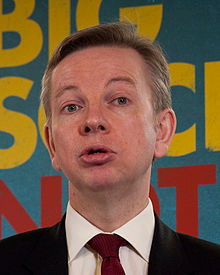
An article in the Guardian by Patrick Wintour commenting on Michael Gove's idea to give the Queen a new yacht for her diamond jubilee is bound to create a furore from the public who are seeing their jobs lost and their future going down the pan.


Michael Gove

So what is a millionaire Tory doing suggesting that we spend an huge amount of money, from a decreasing public purse, in giving one of the richest women in the world a £60 million pound toy to play with? Gove, an ardent monarchist and a supporter of the Union, who a history of having his snout deep into the Westminster trough, gives his reason as:

"In spite, and perhaps because of the austere times, the celebration should go beyond those of previous jubilees and mark the greater achievement that the diamond anniversary represents."

Is this guy off his rocker? We are about to go into, if not already in, a recession [personally I believe we are in a depression as I don't believe the treasury figures for one moment] and he wants to waste, on top of the huge amount of money already allocated for the jubilee celebrations, even more money. This man has made a career of rising from a poor and uncertain background to a prominent figure in the UK government. Good luck for him for doing that; he has my respect but not at the expense of those who can poorly afford to pay for it. I believe that is called climbing over people to get to the top. The man is a moron if he thinks that this sort of extra expenditure will go down well with those who are about to lose their jobs and as the Scottish Government are looking for excuses to point the finger at UK wastage.
So, what will the benefits be to the British public, apart from watching a rich women on the sycophantic, monarchist-orientated BBC programmes, as she swans about the world in her cheap yacht? It will bring jobs to the shipbuilders. True. It will give employment to the people who have to staff it. True. But do we want to see this sort of money wasted when she could easily afford to pay for it herself? We have already taken out of service her last yacht.


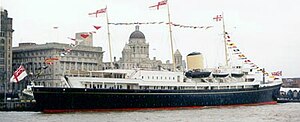
HMY Britannia

And, of course, they also had the royal racing yacht, the Bloodhound
The days when we could afford those luxuries for our monarch by ripping off the rest of the world have long gone, and good riddance to those days.

Sunday, January 15, 2012

HeraldScotland-the 'Winds of Change'?


Has the winds of change finally been felt by a leading Scottish paper? The Herald, along with the Scotsman, was as Unionist as it comes but the Herald has either seen the political light or is eyeing up the revenues it may receive come the referendum debate. There will be a lot of money to be spent, by both sides, and should be a windfall for whichever paper grabs the most in advertising revenues. I suspect that STV and Grampian are eyeing this up as well.

http://www.heraldscotland.com/politics/political-news/tycoon-snp-supporter-backs-third-option-referendum.1326596744

http://www.heraldscotland.com/politics/political-news/salmond-faces-devo-max-opposition-from-his-own-msps.1326596744

http://www.heraldscotland.com/politics/political-news/blow-for-scots-tories-as-chief-fundraiser-quits.1326596744

http://www.heraldscotland.com/politics/political-news/libdem-says-it-is-scotlands-debate.1326510263

http://www.heraldscotland.com/politics/political-news/commissions-review-could-restrict-scots-mps-voting-rights.1326510263


Now, I am not saying that all the political stories in the Herald are pro-SNP but there is definitely a shift away from being anti-SNP. It is definitely a start, as opposed to the BBC in Scotland who are not dependent on revenues.

Saturday, January 14, 2012

The effects of Scotland's referendum on the rest of England


An interesting side effect of the upcoming referendum is that the rest of England is now beginning to question its place within the UK. While the status quo remained the areas of England, outwith the south east, has accepted their lot. Not any more:

OurKingdom

Carlisle's view

The Cornish republican

England devolve

There are loads more but you get the point.


Wednesday, January 11, 2012

Herald poster

This was posted on in an article in the Herald today. A guy called Brian Harrison from Plymouth and is worth repeating again.

They all talk principle and legalities but this is about power. The UK is an extremely centralised state: power resides at Westminster and no one at Westminster will voluntarily to give any of it away - (Blair was pushed into devolution by the EU). Salmond is also about power and wants to see as much as possible of it at Holyrood. 

For me the key question "is do you think over the last 40 years that Westminster has done well and will continue to do well?" The answer has to be resounding NO for anyone in the UK who does not live in the south east of England and who is not into Great Britain as a world power.

Westminster is incompetent. This incompetence of leadership is clearer the further you get in any direction from London, and wider travel plus the internet have made the comparisons easier to draw. It is not just the scandals like the Iraq war, MP's expenses, News International, the power of unregulated banks, or even the hilariously inconsequential public inquiries ("Carry on, Westminster"): it also shows in the numbers.

Google almost any economic measure - GPD per capita, percentage industrialisation, balance of payments history, balanced budgets, debt levels - and all the North European countries, (except France and Finland on some measures), outperform the UK. The UK's long term economic failure versus its Northern European competitors is being achieved despite reduced union bargaining power, significant privatisation, and it being made easier to sack staff than in any of them, and also despite repeated devaluations (a factor of 5 compared with German currencies of the last 40 years). The UK has had North Sea oil and still achieved a permanent trade deficit: genius.

For most social indicators - life expectancy, obesity, cocaine usage, teenage pregnancy, % GDP spent on Health, % of the population in prison, etc - the UK is nearly always the worst, and the more time you spend in Northern Europe the more you sense this. The internet also reveals that the same is true for less obvious indicators - social mobility, Gini index, percentage of women in positions of power, pay differentials, pension regulation, percentage of youth in training, liveable cities, renewable energy capacity, etc.

With its massive centralisation of power, its secretive ways (look up the McCrone report if you live in Scotland), and its unwritten constitution, Westminster is failing the individual populations of England, Scotland and Wales.

But despite the crowded trains, the cracked pavements and pot holed streets that catch your eye when you return here, Westminster cannot make the comparisons: it thinks in terms of its own importance, total GDP -" we're 6th in the world", rather than that of its citizens, GDP per capita - "we're poorer than everyone in Northern Europe". It is not just Westminster that is dysfunctional, but so is the underpinning "Great British" culture of its political and chattering classes, a culture that is encapsulated in the veneration of the polar explorer Scott, whose men died of starvation and who lost to Amundsen, whose men put on weight. It is not just the endless wrangling of left and right idealogues, any form of drama is more valued than a grasp of the numbers, cooperation and long term thinking. Costly and outdated assumptions are not challenged, as if Britain somehow deserves its UN security council seat, as if it can afford Trident and its military spend, and so, from Suez to Iraq, it is considered normal to indulge in murderous, self important adventures. Most disabling are the myths - Westminster being the mother of parliaments has nothing to learn from other democracies - and distorted narratives of identity - we won WW2 and have little to learn from our neighbours. The arrogance of empire without the fact.

The current British state works well for the metropolitan chattering and political classes, Westminster in short, who even if they do not believe all the myths buy themselves out from sharing the health and education services of their fellow citizens, and who, looking only to the USA, enjoy empire by association; however, for over a generation "Westminster" has failed the test of basic competence, let alone met the aspirations of the governed. Unlike the successfully capitalist countries of Northern Europe, the UK is simply not earning its living in the world. As a result it can afford less and less of the modern goodies, like infrastructure investment, market regulation, targeted welfare and wide access to education and training: this leads to its making worse use of its only asset, its people, who become less resourced, less educated, less numerate, less healthy, less socially mobile, less united in purpose, which in turn leads to less wealth creation, which in turn leads ... etc, etc.

In Scotland the SNP are quite rightly looking to the more successful countries of Northern Europe as their model, because it would be almost impossible to do worse than Westminster, from whom the rest of us should try to remove as much power as possible: if the SNP succeed, we may all benefit.